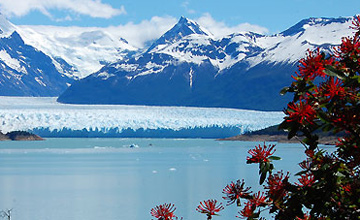
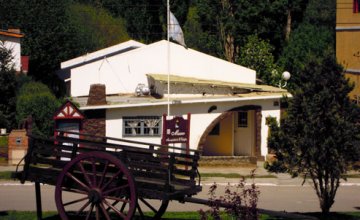
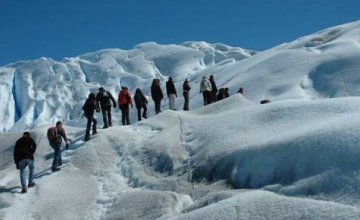
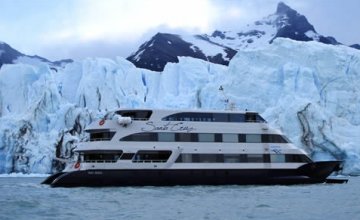
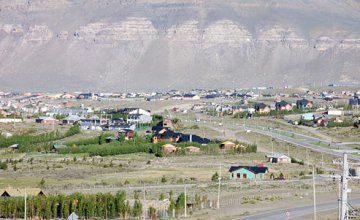
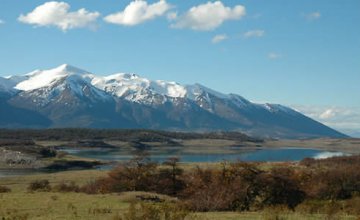
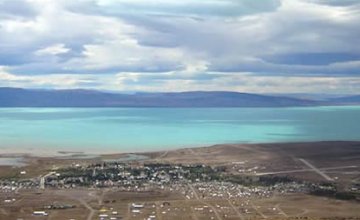
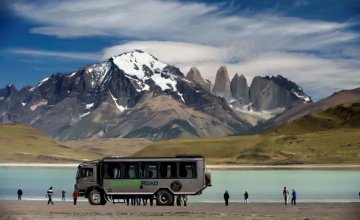
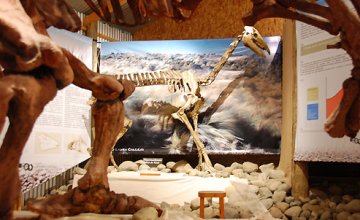
Los Glaciares National Park was created in 1937 with the aim of protecting a vast area of continental ice and glaciers covering more than 600,000 hectares in the southwest of the province of Santa Cruz. Just looking at the pictures is enough to get a sense of the captivating beauty of this icy landscape. Due to its appeal, its glaciological and geomorphological interest, and some of its endangered wildlife, UNESCO declared the glaciers a World Heritage Site in 1981. Los Glaciares National Park comprises a landscape of mountains, lakes, and forests, including a large part of the Andes mountain range, which is practically covered with ice and snow to the west, and the arid Patagonian steppe to the east.
Parque Nacional Los Glaciares
Con el espíritu que guió la creación de los Parques Nacionales, era inevitable que uno de los monumentos naturales más sublimes de la naturaleza argentina, tuviera su propia área de preservación.
-
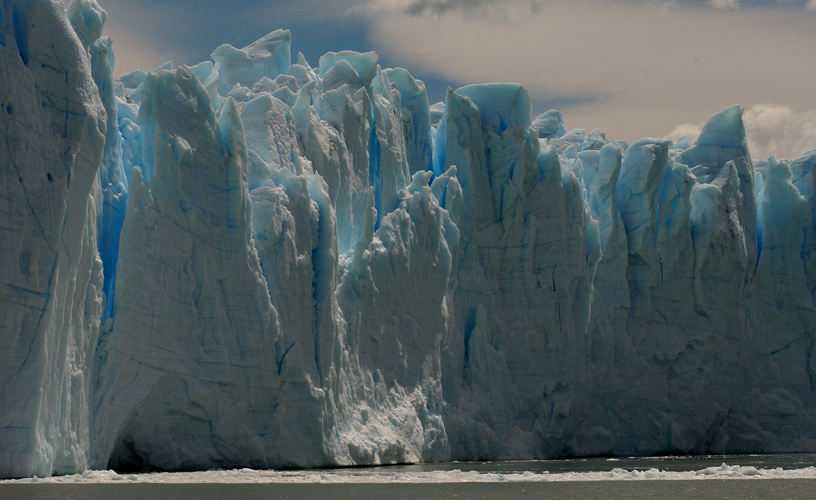
Perito Moreno - Foto: Palmiro Bedeschi
-
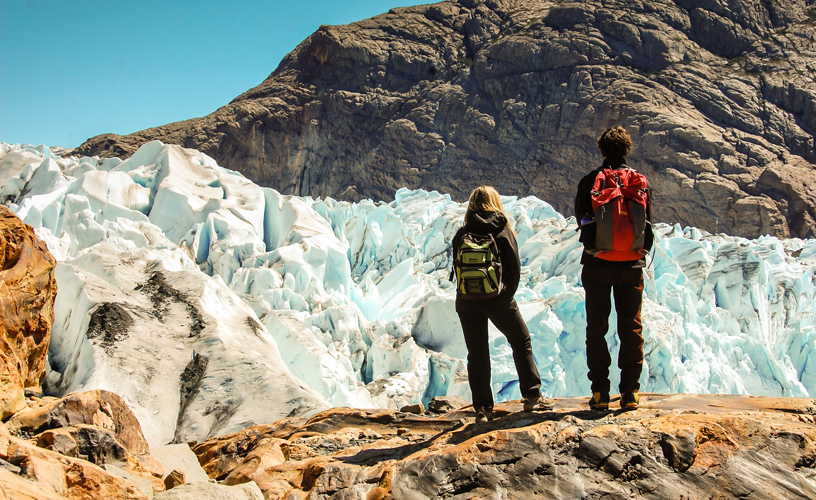
Glaciar Viedma - Foto: Jorge González
-
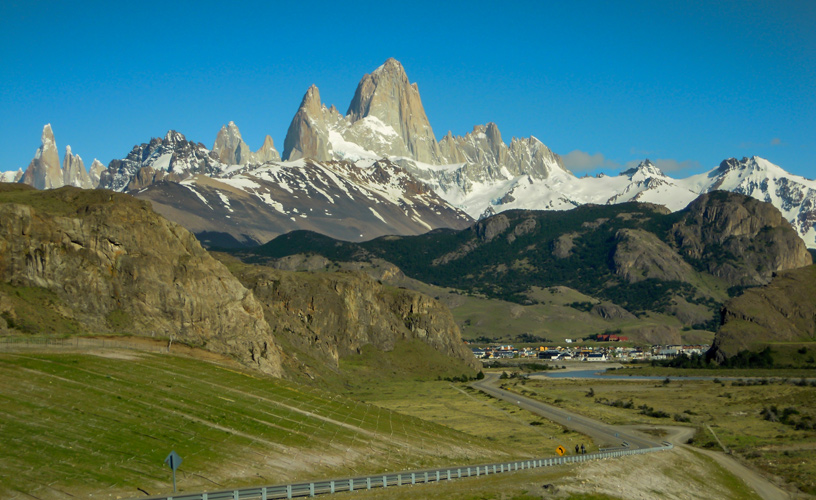
El macizo Fitz Roy - Foto: Cristina Sabaliauskas
-
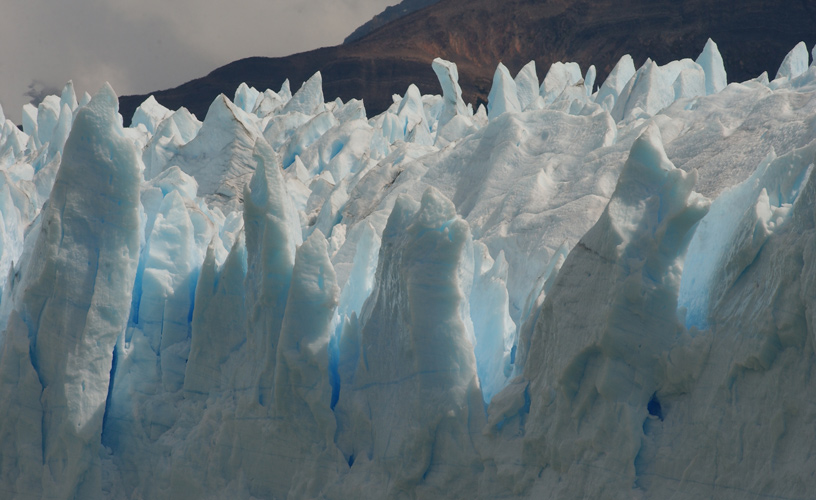
Perito Moreno - Foto: Palmiro Bedeschi
-
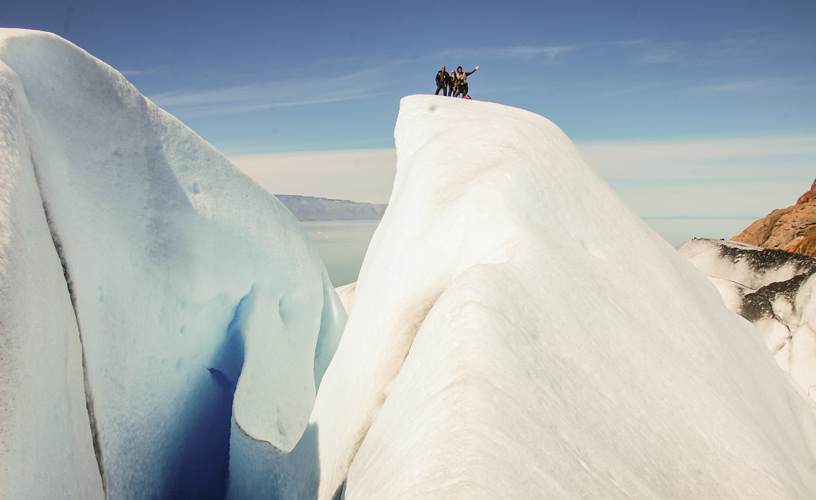
Glaciar Viedma - Foto: Jorge González
But without a doubt, the Patagonian Ice Field commands the greatest attention. Its ice mantle is the largest in the world after Antarctica. These ice fields, also known as the Patagonian Continental Ice, cover an approximate total area of 2,600 km² and represent more than 30% of the protected area. From these frozen expanses originate 47 major glaciers, 13 of which flow into the Atlantic basin. In addition, there are 200 smaller glaciers independent from the main ice field.
Cold Goliaths
This unique southern wonder holds extraordinary glaciological characteristics: un other formations that originate at 2,500 meters above sea level, these glaciers begin at around 1,500 meters above sea level and descend to just 200 meters above sea level, offering access and views that are unique in the world. Formed by the meltwater of this vast system, two large lakes—Lake Argentino and Lake Viedma—drain into the Atlantic Ocean after crossing the entire province of Santa Cruz through the river of the same name.
Lake Argentino is the stage for the encounter of two colossal giants: the Perito Moreno Glacier and the Upsala Glacier. The best-known of the two, Perito Moreno Glacier, owes its fame to the constant movement of its ice masses, caused by a cyclical phenomenon of advance and retreat, with spectacular calving events from its enormous 5-kilometer-wide front rising 60 meters above lake level. Its continuous movement is both astonishing and fascinating, leading to the accumulation, fracturing, and collapse of gigantic blocks of ice. With the roar of thunder, these massive chunks plunge into the water, breaking apart and drifting through the Iceberg Channel.
Every threefour years, the gradual rupture and subsequent leveling of the lake waters leave those who witness it breathless and in awe. In contrast to Perito Moreno, located in the northern arm of Lake Argentino, the Upsala Glacier stretches 50 kilometers in length and nearly 10 kilometers in width. In the northern sector of Los Glaciares National Park, the Fitz Roy massif, rising to 3,375 meters, and Cerro Torre, at 3,102 meters, reign impassively over the highest surrounding peaks and display the greatest diversity of granite formations in the Andes.
Creatures of the forest
Guarded by mountains and glaciers, the sub-Antarctic forests cover around 79,000 hectares, where lenga and guindo trees predominate. Because it better withstands low temperatures, the lenga grows closest to the glaciers, and its forests also cover valley floors. The guindo, with characteristics very similar to the coihue, is more closely associated with the oceanic climate and is less tolerant of wide temperature variations.
Among the shrubs, the forest is adorned with vivid colors: the notro with its red flowers, the calafate with yellow blossoms and violet fruit, and the devil’s elder in the wetter areas of the forest. Ferns, mosses, lichens, and flowers such as the slipper-shaped topa-topa and orchids are also found. Bluish vetches grow and carpet the areas near the glaciers, while Antarctic butterwort, a carnivorous plant with violet flowers, attracts insects to digest them and obtain the nitrogen compounds necessary for its nutrition.
During winter, the huemul deer descends from high-altitude grasslands into the forests in search of food and shelter. The great diversity of birds—including the Patagonian black woodpecker, the austral parakeet, and the ruby-crowned hummingbird—also includes aquatic species such as black-necked swans and ducks the great grebe and the torrent duck. Above the forests, from 1,000 meters in elevation up to the permanent snow line at around 1,600 meters, high-altitude semi-deserts extend. To the east, the foothills of the Andes gradually fade into the Patagonian plateau, where forests give way to steppe landscapes with low, compact grass clumps. Guanacos, gray foxes, and Patagonian skunks inhabit this region. Among steppe birds, the great runner is the lesser rhea. In the northern sector of Los Glaciares National Park, significant populations of condors and crowned eagles nest.
Traces of the past
Archaeological research indicates that three thousand years ago, the Lake Argentino region was inhabited by groups of hunter-gatherers—agile and capable of exploiting areas in both the steppe and the forest at elevations ranging from 200 to 1,100 meters above sea level. Their subsistence relied mainly on hunting guanaco, while also using different environments in a complementary way throughout the year. Materials originating from the Pacific Ocean have also been discovered, suggesting either direct access to those areasthe existence of exchange networks.
In this remote corner of Argentina, nature has surpassed all magnitudes, never ceasing to amaze us and compelling us to reflect on our finite human existence.
Routes: – Boat excursions on Lake Argentino depart from Punta Bandera and allow visitors to explore Onelli Bay and the Upsala Glacier. – Via the Brazo Rico road, visitors can access viewpoints and walkways overlooking the Perito Moreno Glacier, offering spectacular views. – Mount Chaltén (Fitz Roy), at 3,375 meters high, is a meeting point for mountaineers from all over the world undertaking high-level professional expeditions, which must be authorized by the National Parks Administration. – Sport fishing enthusiasts can enjoy introduced species in Lake Roca, Lake Viedma, Lake Argentino, and the Las Vueltas River.
Los Glaciares National Park
Address: Av. Libertador 1302.
(9405) El Calafate – Santa Cruz – Argentina.
Phone: 54 2902 49100 / 49175 / 491026.
E-mail: [email protected]; [email protected]
Bibliographic sources: Erize, F.; Canevari, M.; Canevari, P.; Costa, G. and Rumboll, M. “Los Parques Nacionales de la Argentina y otras áreas naturales.” INCAFO Publishing, Madrid, 1981. Official website of the National Parks Administration: www.parquesnacionales.gov.ar
 Karina Jozami
 Welcomeargentina.com
 How to get here: Desde el norte por la Ruta Nacional Nº 3 hasta Río Gallegos, continuando por las Rutas Provincial Nº 5, Nacional Nº 40 y Provincial Nº 11 hasta la localidad de El Calafate, distante a 50 km del Parque Nacional Los Glaciares. Desde El Calafate se arriba a la localidad de El Chaltén a 316 km, en la parte norte del área protegida.
Por avión se accede desde Buenos Aires hasta Río Gallegos, y desde allí salen vuelos locales hacia El Calafate.