Argentine Wines
TASTING THE WINE
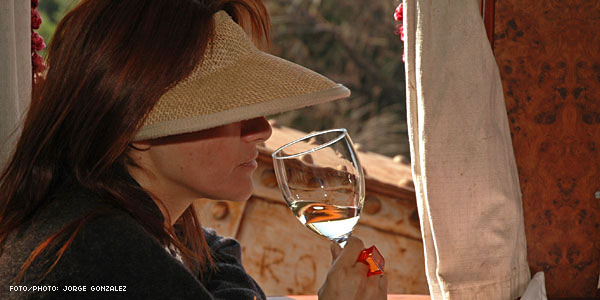
The remarkable and great number of wine accessories existing at present makes people think serving wine may be a confusing and difficult exercise. To avoid this, there are 3 important aspects to bear in mind. These will guarantee a successful result at the time of serving the wine.

to consume wine:
Sparkling wines : 7-9 degrees
White, rosé wines : 9-11 degrees
Young red wines : 10-12 degrees
Great white wines : 10-12 degrees
Great red wines : 16-20 degrees
In the event that no such information were contained in the label, one must basically know that white wine must be chilled enough to turn out to be refreshing, whereas red wine should be at room temperature. If a lower temperature is desired, we recommend placing the bottle inside an ice bucket.
 We recommend performing this ritual with the corkscrew that turns out to be most practical and comfortable to use.
Follow these steps:
1 » Put the bottle on a table and remove the upper end of the foil covering the cork. This operation may be done with a foil cutter, though the right way is to do is it with the knife that is part of the so-called "waiter" corkscrew, which allows making the cut under the neck of the bottle.
2 » Insert the tip of the curl in the center of the cork and start rotating the corkscrew (it is the corkscrew which must turn, not the bottle).
3 » Start removing the cork slowly and when it is about to come out, make some circular movements in order to allow the entrance of air so that the cork ejects with the less noise possible.
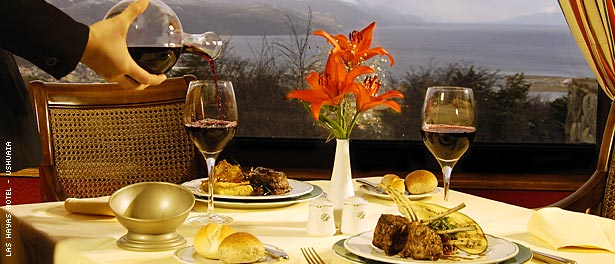

Once the wine has been chosen, the temperature to serve it has been considered and the bottle has been uncorked, the next step to consider is where to pour such coveted beverage.
Choosing the glass to taste the wine is not conditioned by chance. The glass may increase or lower the degree of satisfaction of the chosen wine considerably. The shape of the glass will have a determining influence on the flavor the wine will present in the mouth.
For such purpose, we recommend that you choose a glass that narrows at the top, that is made of the finest crystal, smooth and transparent, whose stem is long enough so as not to touch the goblet when holding it. A glass featuring these characteristics will lead the liquid directly to the senses in order to highlight its qualities.
Finally, it should be known that red wine is to fill two thirds of the glass' capacity whereas white wine will occupy a little less volume, so that the temperature of the beverage does not rise inside the glass.
If all these items are carefully considered, the wine will surely have been served successfully and all its virtues will have been highlighted.
© 2003-2026 Total or partial reproduction forbidden. Derechos de Autor 675246 Ley 11723
Who we are | Contact us | Press and Publicity | Terms and Conditions