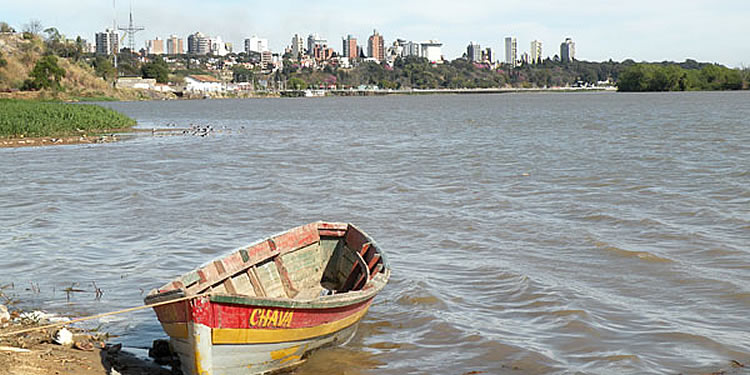
Chamigo pescador is more than a greeting. It means "angler friend" in guaraní and it turns out to be a phrase of worship for lovers of sport fishing. Even if the popular saying was born in the Province of Corrientes, it rapidly spread along the whole basin of the Paraná River, its streams, brooks and isles.
The muddy and stony bed of the Paraná River turns its waters muddy in the South of the Province of Misiones. As the river crosses the Corrientes coasts and the shores of neighboring Paraguay, it receives a large amount of sediments from streams, brooks and rivers which pour not only their muddiness into the great river, but also forage species, such as bream, dentudos and catfish shoals, which are the main course for large predators.
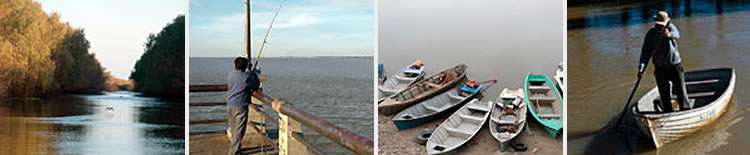
The dorado is the most beautiful fish that dwells in the waters of the Paraná River. Baptized as the "tiger of the rivers", its mood and hunting voracity at the time of getting food are the perfect base for its well-deserved nickname. There is not a more fighting species in sport fishing. Owner of impressive teeth, once hooked, the dorado starts to make big acrobatic jumps that increase the level of excitement in this kind of fishing. The fight against this large fish usually lasts long minutes of tension and adrenaline. The fishing of the dorado is considered as one of the best worldwide. Paso de la Patria, opposite the Cerrito Island, is visited every year by anglers from all round the world, who go there to take part in the Fiesta Internacional del Dorado (The Dorado International Day) in the waters of the Paraná River.
The surubí is another great trophy treasured by the Paraná. In the open river, it can be found on the coast area and deepest banks. But its territory are the channels and brooks crowded with old trees and raigones, which are predominant in the Goya fishing sites, where every year there is an appointment for Fiesta Nacional del Surubí (Surubí National Day).
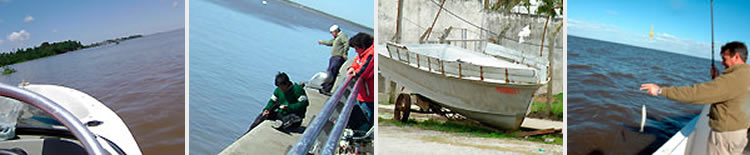
Up to the North, Itatí, Ita Ibaté and Ituzaingó are also excellent fishing spots, where apart from the traditional surubíes, you can catch the spotted and striped species.
The pacú is another large species very much searched by sport anglers in the Argentinian North. Its flesh is magnificent. Its diet consists of fruit and seeds falling from the trees. It is fished in channels and brooks with slow or no current at all, which are the natural habitat of the species.
The wide river crosses the Provinces of Misiones, Chaco, Corrientes, Santa Fe and Entre Ríos, and finally ends in the Río de la Plata delta.
Fishing is good along almost the whole river, but it is spectacular along the whole Province of Corrientes. There, fishing spots such as Esquina, Reconquista, Goya, Bella Vista, Empedrado, Corrientes City, Resistencia, the famous Isla del Cerrito and Paso de la Patria, are obligatory destinations for thousands of anglers who come every year to capture the largest species in the river.
Somewhere before the Paraná River ends in the Río de la Plata, you will come across La Paz, which turns out to be the best fishing site in the Province of Entre Ríos. There, the river forms an inner delta with sandbanks and rapids, streams, brooks and lagoons which are ideal sites for the river variety, including large predators, such as the dorado, the wolf fish and the surubí.

 En
En