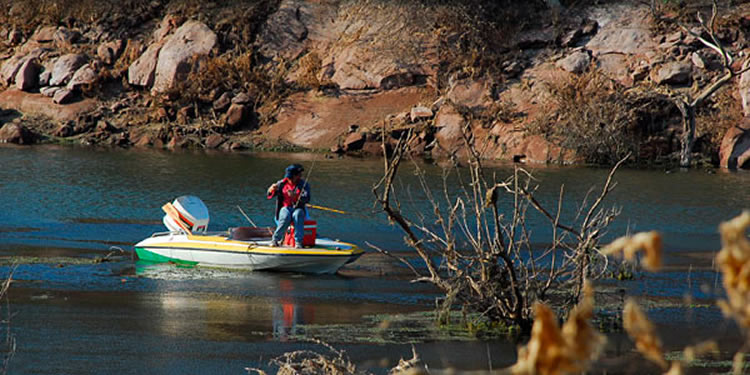
It is not written in any book but, as so many other truths about life, it is known that you have to fish a dorado (golden fish) in order to "graduate" as an angler. From time immemorial, this big fish has been an object of admiration. And the entire Paraná River basin, with the same color as the lion, its water hyacinths, its large rocks and its strong current, is one of the natural paradises where it dwells.

The first natives would use it as a source of food, although they used to worship the god of gold, as they believed that a divine grace had given origin to it. Even the Spanish conquerors were fascinated by its beauty and voracity, a characteristic which was not common to European fish.
Its strong personality, its large size and its unquestionable beauty make it a mandatory target in every small town and city located on the bank of the river. The tour for its quest includes the Entre Ríos delta, the Iberá swamps, the high Paraná River in Corrientes and Misiones and the clean and transparent Uruguay River, the deep quietness of the Paraguay and Pilcomayo Rivers and the endless torrent of the beautiful Bermejo River.
With the passing of time, even literature has assumed the task of recording its existence. Many writers have described it perfectly, such as Horacio Quiroga in his book Cuentos de la Selva (Tales from the Jungle). The brilliant and unforgettable Haroldo Conti tells in a terrific way the difference between the two kinds of existing dorados in his book Sudeste (Southeast). And finally, Roberto Zapico Antuña, maybe the first angler-writer of the 1960's and 70's, dedicated it a book called El Dorado, which unfortunately has never been published again.
The traditional dorado festivals, both in the well-known district of Paso de la Patria, in Corrientes, and in La Paz City, in Entre Ríos, are ideal to get to know and understand the fanaticism and passion awoken by this fabulous fish in anglers from all round the world.
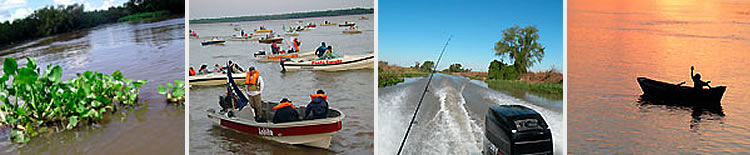
In both contests, the catch and release motto has already been adopted. This principle was implemented in order to slow down the progressive decrease not only of the dorado size but also of their amount. The old gancheras full of dorados are now part of a past we must not bring back to life. The new practice which consists of returning the fish into the water is gaining more and more supporters. It is a real act of courtesy by the angler, who can enjoy the sport without putting an end to the life of his adventure partner, one of the most beautiful fish in the planet which, along with the surubí, inhabits the River Plate basin. But that is a different story...
The Province of Corrientes treasures a legend that has been told by the wisest guaraníes for centuries.
One night, the great gods warned the Inca chief that he should hurry to hide the most important treasure possessed by his empire, but that he himself should become aware of what it was before loosing it completely.
The following morning, the great Inca informed its people about the decision to hide the formulae that converted all metals into gold. The difficult task remained in the hands of the two most honest headmen in the empire, called Paraná and Uruguay. They should travel as far as possible until they came to a great sea where the sun would rise from the water. They only took two sealed wooden boxes inside which contained the magical liquid.
They walked for days and months without finding what they were looking for. Tired of going along brooks and streams, and after crossing large rivers, one day they got to an island, where they resolved to end their trip.
The legend goes that they both found the sun rising from the water and that, tired and without knowing if they were in the right place, they opened their boxes and spilled the liquid into that sea. It was at that very moment in which the waters started to become turbid and golden, and all their fish adopted the color of gold, just as the metals had done in the past.
When they saw such beauty, they both dived into the water in order to catch them, but the current took them downstream furiously. While they were drowning, each of them cried each other's name and both happened to hear one another as they were separate by only one big mount.
At that moment, the voice of the gods told them that their great Inca chief had been wrong and that the most precious treasure he should have saved was his people, not his gold.
And thus, as a way of gratitude, the gods turned Paraná and Uruguay into two great water seas where, since that moment, the sun rises and sets everyday. And from that moment on, the only rule the gods imposed on men was to look after the golden fish forever.

 En
En