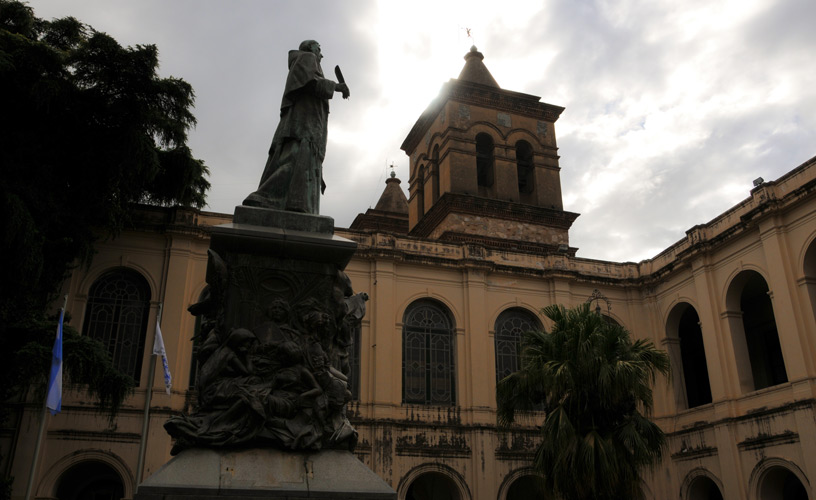
Long ago Córdoba was appreciated by its hills and in the capital city only the Cathedral, the Company of Jesus church and the Cabildo were visited. When the legacy of the order of San Ignacio de Loyola was valued, the Jesuit Square gained historical meaning and became a must for visitors.
We walked towards the church where the tour begins. We knew that we would step on great patrimonial value demanding respect. We were welcomed by Guadalupe Biscayart Melo, the tour guide, who reminded us how the colonial period developed in Cordoba.
We heard again that Cordoba had been part of the Viceroyalty of Peru and did not have any gold or silver. With the arrival of the order of the Jesuits in 1599 to evangelize, they took possession of the square where there was a chapel. Then, they started the construction of San Ignacio Church, today known as the Company of Jesus Church. It is the oldest church in Argentina and it took 36 years to build it.
One Square, Four Centuries
-
The relics inherited
-
Great patrimonial value
-
The National University of Cordoba
-
Excellent information of the time and provide ornamental detail
-
Colegio Nacional de Monserrat
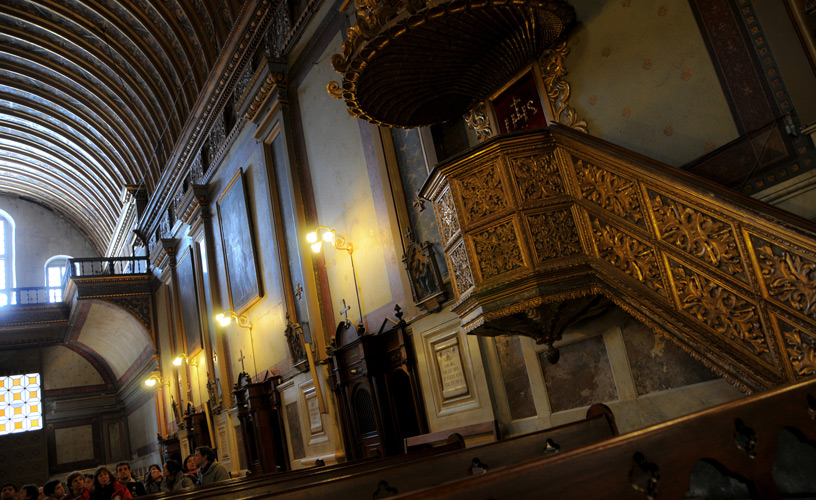
Its facade has no ornaments and it is believed that it was never really finished. Once inside, the contrast shocks you. Its Baroque interior demonstrates two styles: the original one, very dramatic, colorful and with a strong predominance of gold leafing, and the Neoclassic style of the nineteenth century. The central nave follows the outlines of the Latin cross without interior columns and its barrel vault is very light and was entirely made of wood.
"Appreciate the size and the paintings of the main altarpiece. You will discover many of the first Jesuits in the images", said Guadalupe as we came up to it. "The pulpit has great acoustics and shows the original gold leafing technique."
The Guarani missions and the African slaves provided the labor and that was the beginning of the mixed race.
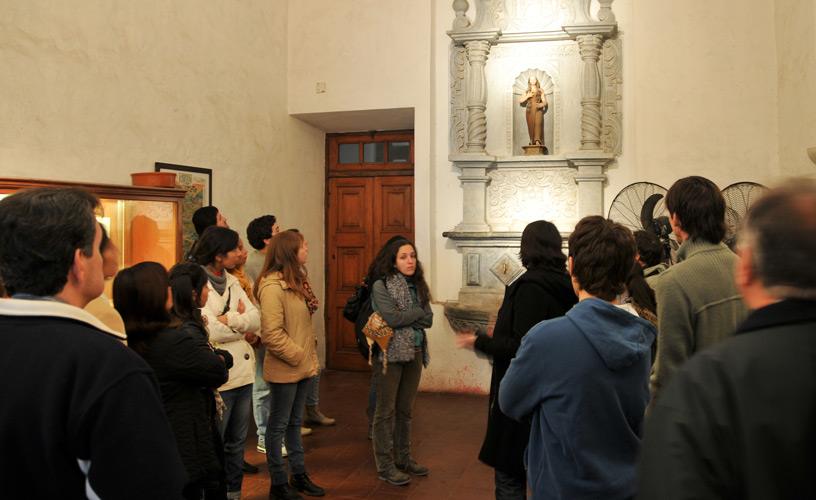
We checked the inside of the church for the last time and then headed for the university area open to visitors. In the sacristy, a Quito School of Arts painting dating back from 1700 portrays a biblical character, Mary Magdalene, with native features. The main walls are almost a meter thick and they were made with stone. They have huge doors made of Paraguayan cedar tree.
"You haven´t seen it all yet! Get ready to see some incunable books while we ferret out the secrets of the period" said Guadalupe as we visited the back yard and reached the bookstore.
Volumes of books treasured by priests are preserved at this spot. The topics include: theology, philosophy, medicine and architecture written in Latin, Spanish, Italian, French and the languages of the time.
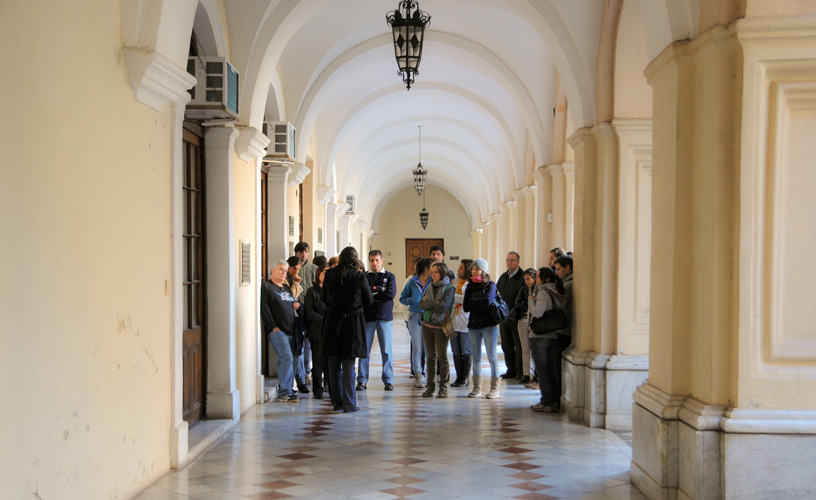
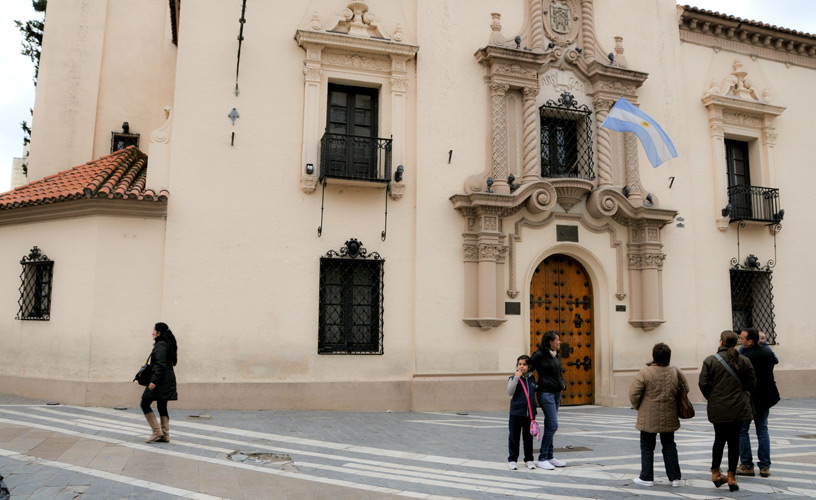
The National University of Cordoba and Colegio Nacional de Monserrat are in the same Square. The room where people defended their thesis on theology was visited. Although it was not the original room, they respected the esthetics of the nineteenth century. High-back chairs give the setting certain harshness where the priests sat for their final exams.
They are the oldest institutions in the country and are believed to offer excellent academic knowledge to all social classes without exception. In the beginning, the Jesuits organized the Colegio Máximo and students worked on philosophy and theology there. Pope Gregorius XV authorized conferring grades in 1621.
Three Argentinean presidents studied there, among other relevant characters of the time. They were members of the First Independent Government of 1810.
UNESCO declared the Jesuit Square as World Heritage Site in 2000. It includes, apart from the above-mentioned monuments, the National Academy of Sciences and the Paleontology and Zoology Museum.
Cordoba received an important award and it keeps on preserving its cultural resources. Also, it celebrated its 400 years with 400 days of celebration. The city shows respect for the unique characteristics of such historical place and it allows us to be part of it when walking along its cloisters.
 Mónica Pons
  Eduardo Epifanio
Contact of the excursion or tour
Museo Histórico Universidad Nacional de Córdoba
Obispo Trejo 242, Córdoba, Córdoba, Agentina
 Phone: +54 351-4332075
Nativo Viajes
Independencia 174, Córdoba, Córdoba, Agentina
Phone: +54 351-4245341