Fully renovated, El Calafate Historical Interpretation Center has added four new rooms to its historical and geological tour that spans 100 million years. It features skeletons of dinosaurs and mega mammals unique in the area.
Inaugurated on October 1, 2003, it is the result of a dream and the work and dedication of a History professor called Luis Calleja, who worked together with Martín Rivas and the assistance of anthropologist Alicia González.
The idea is to propose visitors a journey back in time with the aid of panels printed both in Spanish and English, posters with drawings and photographs, enlarged images, objects, tools and replicas, as well as by sound accounts that enhance the itinerary.
Thus, visitors to the museum may learn about the glacier processes and the ecological transformations of the Pleistocene. The mega-fauna and cave paintings faithfully reflect pre-historical Patagonia. The Tehuelche culture and the first encounters with the colonizers is another outstanding topic, along with the significance of sheep husbandry (a vital activity for the settlement of man) and the large estancias.
Getting to Know the History of El Calafate
-
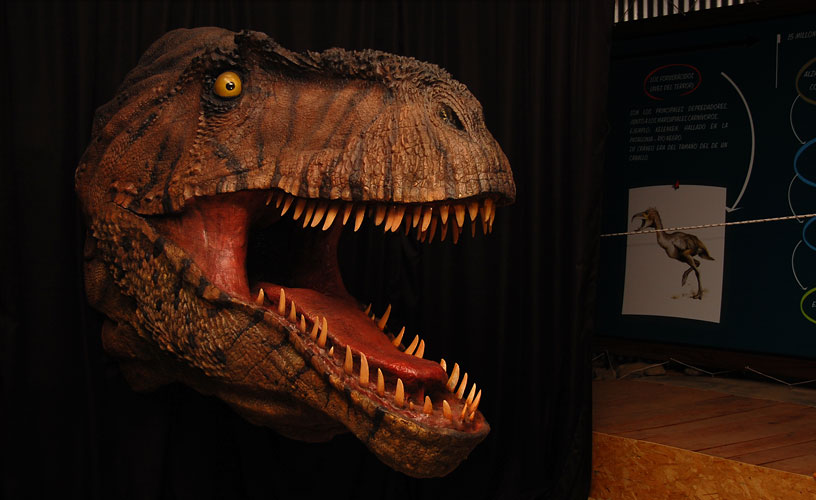
Pre-historical Patagonia
-
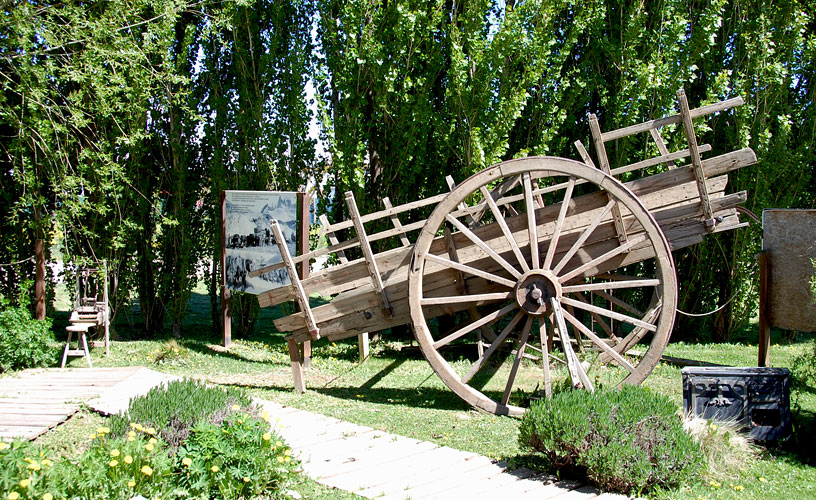
Carts for transport
-
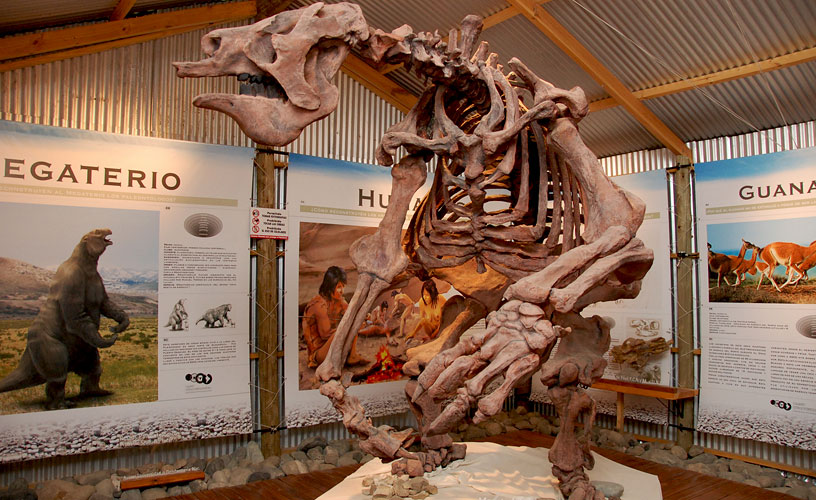
Extinct genus of placental mammals
-
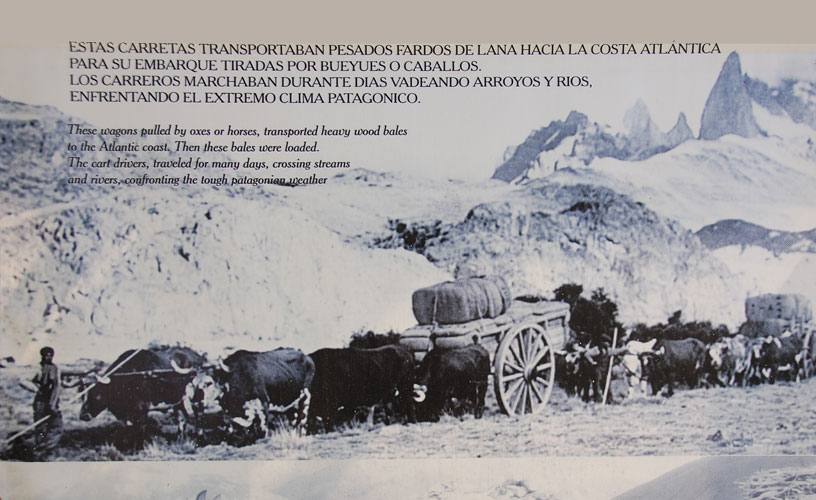
Historical photo
-
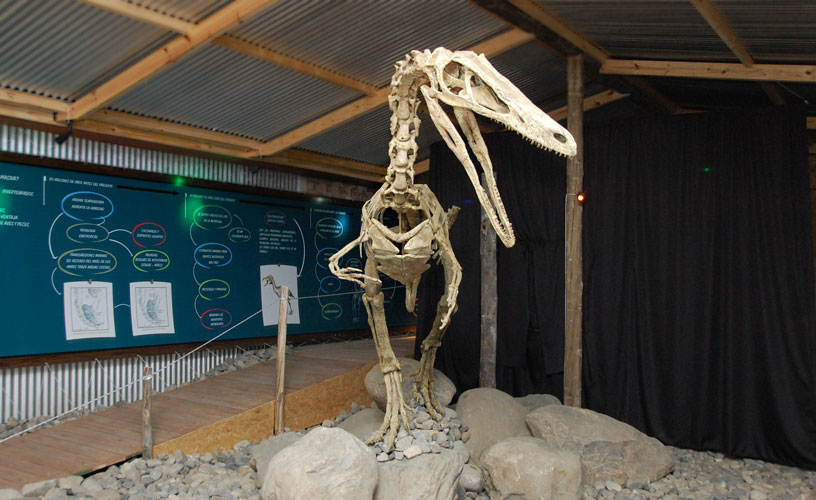
Macrauchenia patachonica
-
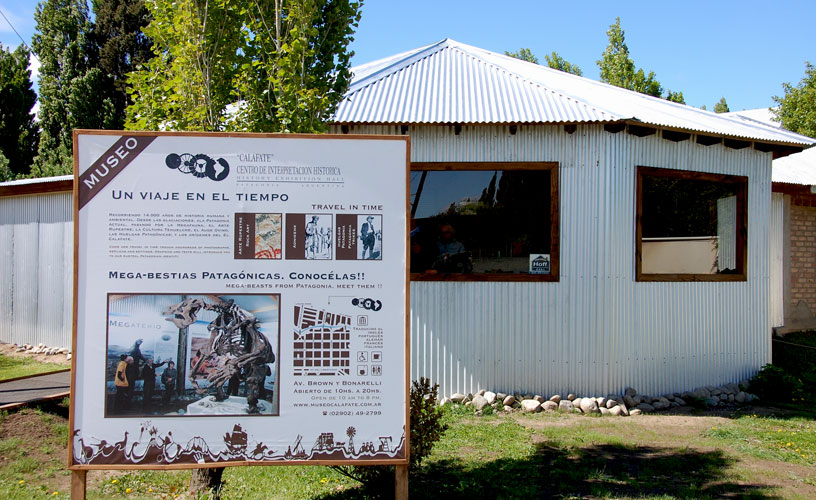
A journey through time
-
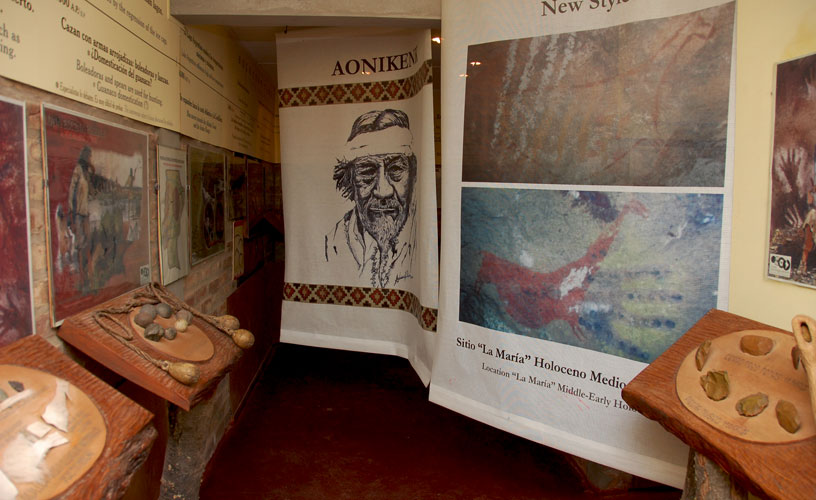
Tehuelche Sector Museum
The tour also covers the labor conflicts and the Patagonian strikes with their tragic outcomes and leads viewers to the very origins of the City of El Calafate.
El Calafate was founded on December 7, 1927 by a decree from the national government which appointed five hundred hectares to the south of the Santa Cruz River on Lake Argentino. Its name responds to the existence of a stout shrub known as calafate close to the creek that crosses the town and which used to be the shelter for carts that transported the wool from the estancias.
The first general store was built by Armando Guillón and in 1913 it was acquired by some immigrants from La Coruña: José Pantín’s family. This was one of the first settlements in the area.
Not only did this family own the general store but they also opened up lodge that became an inn on the mountain range road, where all travelers reaching these latitudes would stop for the night.
In 1946, the measurement of the town was approved and the Tourist and National Parks General Administration was authorized to build Los Glaciares National Park superintendent’s office.
However, the scarce number of steady dwellers caused the transformation of El Calafate into a municipality to be delayed until 1973; the lands were not transferred to the common area until July 1978. Once the democratic administration took over in 1983, El Calafate had its first mayor.
Not only does the Interpretation Center give an account of local history but it also lets visitors experience it as if it was alive. They just need to enter the venue and feel it. The guides have a highly valuable charge of knowledge to share.
 Pablo Etchevers
  Jorge González
Contact of the excursion or tour
Centro de Interpretación Histórica
Av. Brown y G. Bonmelli, El Calafate, Santa Cruz, Agentina
 Phone: +54 2902-492799
 Duration: Approximately one hour
 Opening hours: From 10am to 8pm.
 How to get here: From Av. del Libertador and 9 de julio, walk 4 blocks along this street towards the Nimes lagoon. Cross the stream and take the path on the right till you get to Av. Brown and G. Bonmelli.