Besides its urban attractions and nearby fruit farms, the City of Neuquén has other popular destinations, especially on really hot days.
Leaving Alta Barda and the industrial area behind, we soon found ourselves driving by the beautiful tree-lined boulevards with their sheltering poplars. Dancing in the breeze, their silvery leaves cast their reflection on the fields.
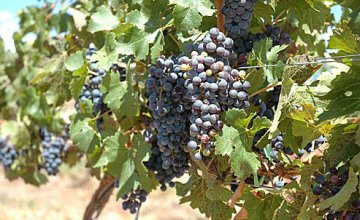
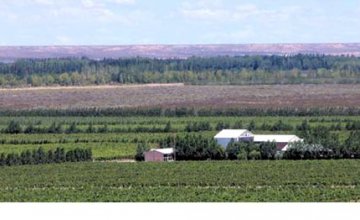
When we reached the roundabout to Centenario, the intense fruit and agro-industrial activities could be seen every step of the way. Crops, packing storage facilities, juice plants, meat packing plants and wood mills were going about their daily business.
Enjoying the green around us, we crossed the bridge over the Neuquén River towards Cinco Saltos and Vista Alegre Sur. At the fork a little further ahead, we had to decide whether to go past Loma de la Lata to the tourist villa at Lake Mari Menuco or to Ballester Dam and Cinco Saltos.
Towards the Nearby Water Mirrors
-
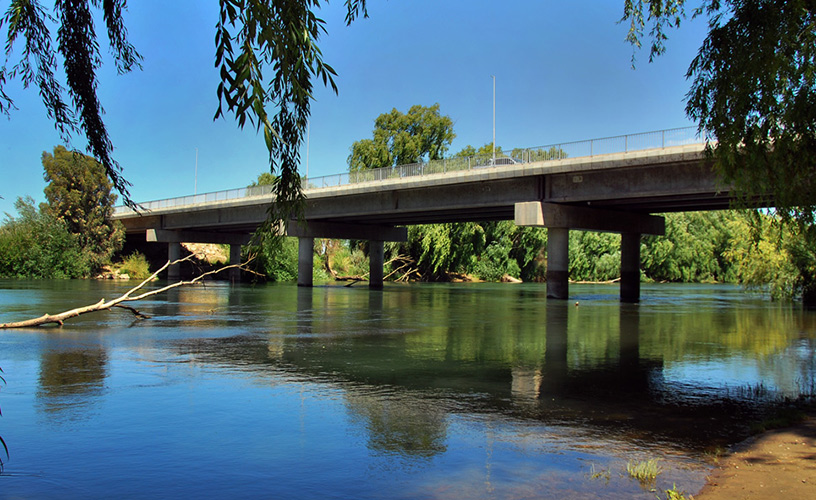
We crossed the bridge over the Neuquén River
-
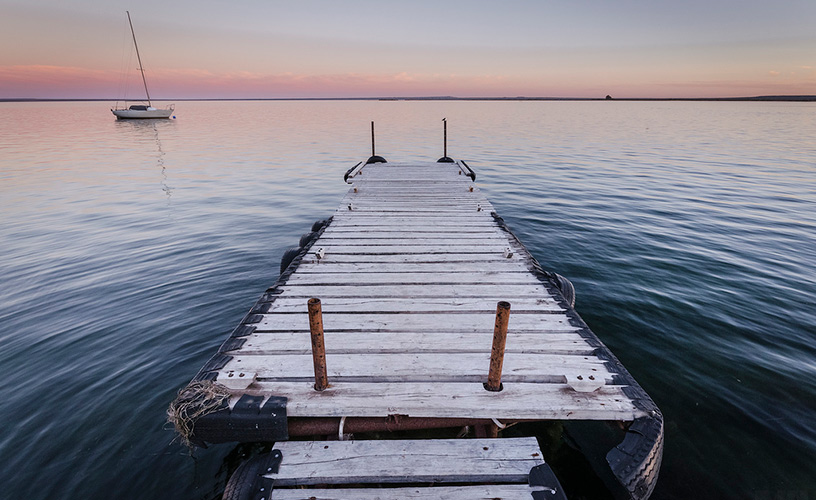
Lake Pellegrini
-
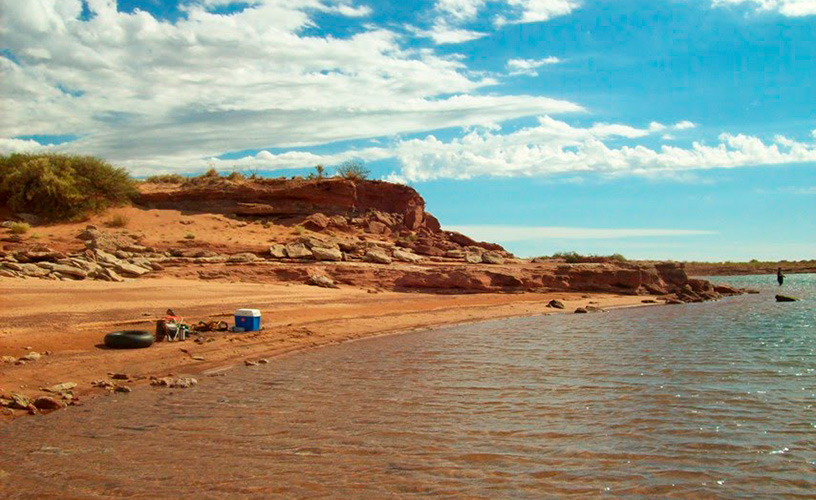
Lake Barreales
-
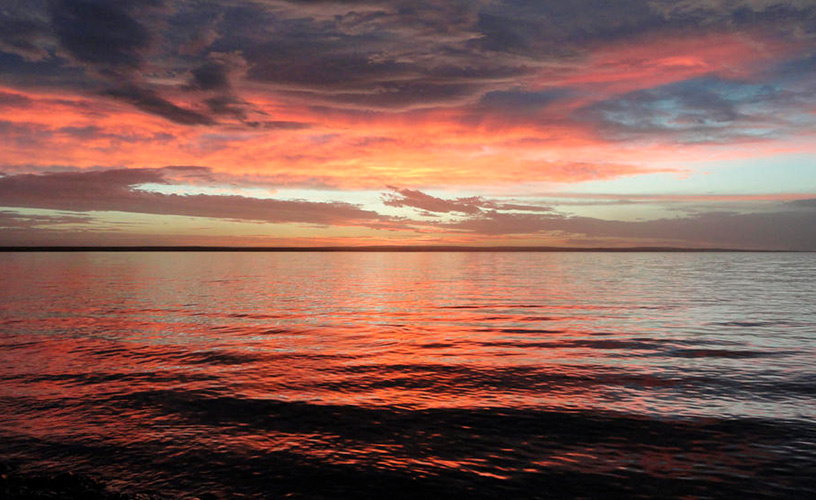
Artificial Lake Mari Menuco
-
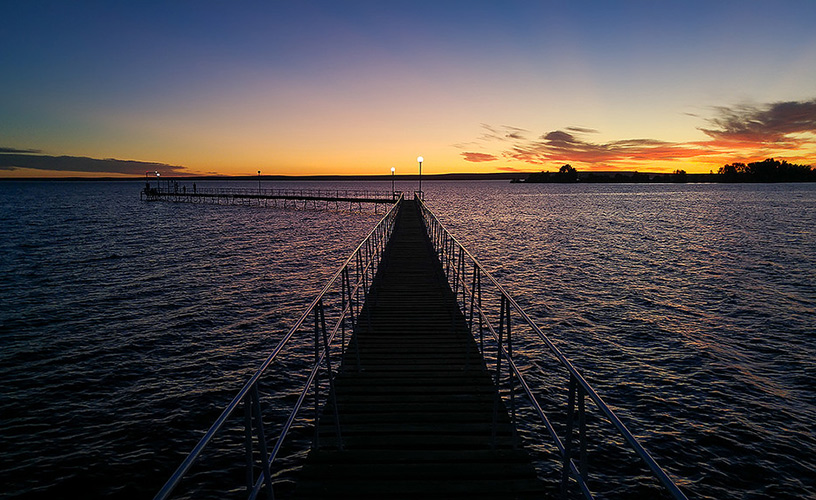
Pier in the Mari Menuco
-
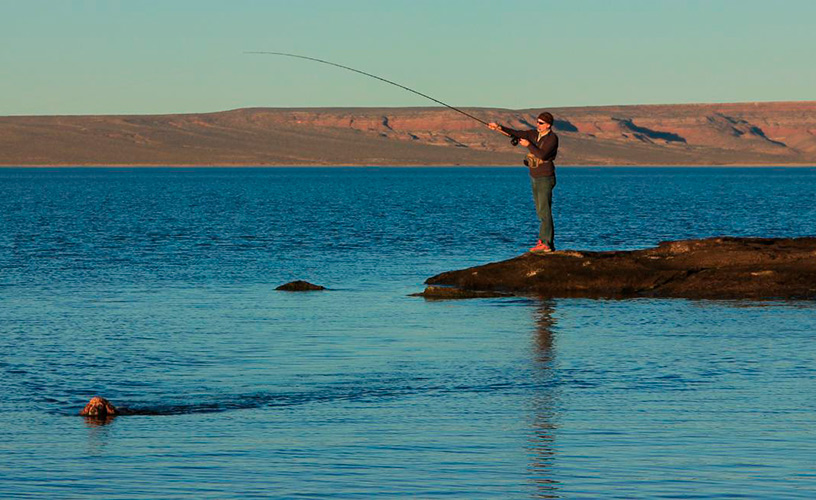
Fishing in Los Barreales
We chose the first option so that we could also go past Lake Barreales, famous for the paleontological digs of the last few years. There are also two dams, Portezuelo Grande and Loma de la Lata which make up a network of reservoirs to control the rise of the level of the Neuquén River.
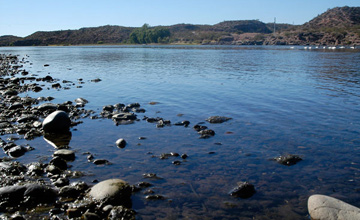
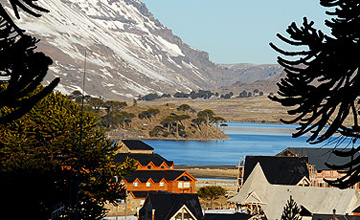
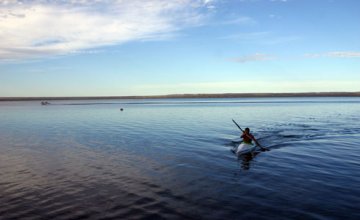
When we finally arrived at artificial Lake Mari Menuco, we were surprised by the development of the village and its infrastructure and services. Fishing and sail sports, the main activities, are becoming more and more popular every summer.
The colors of the cliffs set off the changing blue of the water and the green of the vegetation, turning its back on the desert. In January, the Wakeboarding Festival takes place, with professional demonstrations and competitions. In February, Lake Mari Menuco Festival fuses water activities and music shows.
Peaceful Weekends
You can also go along Provincial Route 7 towards Ballester Dam, easy to recognize due to its 400 meter-long bridge and 17 sluice gates which regulate the flow of the Neuquén River.
Construction took several years, from 1916 to 1931. The dam was built to diminish flooding in the valley and to set up an irrigation system. As soon as the bridge is crossed, the intake, a lighthouse and a sundial are seen. Added attractions are photographic safaris and bird watching.
Having entered the Province of Río Negro and the City of Cinco Saltos, we continued towards Lake Pellegrini. On Ruca Co, a peninsula, there is a stable population, a summer villa and several beaches providing water activities and fishing. Its green water becomes extremely attractive as soon as the weather is warm.
All it takes is selecting a destination and driving out to enjoy the different water mirrors close to the city.
 Mónica Pons
  Gentileza Neuquentur.gob.ar
 Difficulty: Low
 Duration: All day
 How to get here: Take 9 de Julio diagonal out of Neuquén to Provincial Route 7