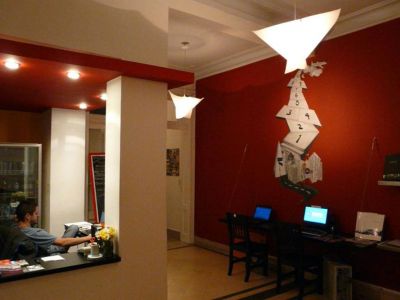
In the Sunshine and in the Shade
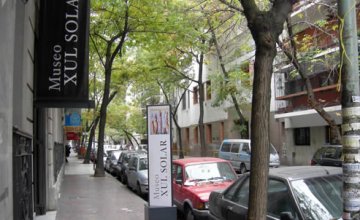
While searching for the Metropolitan Museum address, we found a street that hardly exists: a hundred meters away from the wide Figueroa Alcorta Avenue, Castex Street barely runs for six blocks. The museum is located at one of them.
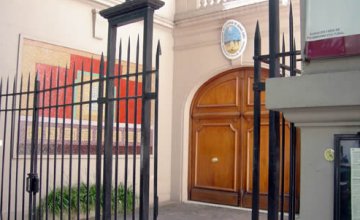
Walking down the spotless sidewalks in the shade of tall trees and a few meters away from the José Hernández Popular Art Museum and the Buenos Aires Latin American Art Museum, we reached the access gate of this stately museum.
A House’s History
The Metropolitan Museum
A huge grand house featuring Academic French style is hidden among trees and embassies at the aristocratic Palermo Chico neighborhood. Today, it opens its gates to visitors and to art: it is the Metropolitan Museum.
-
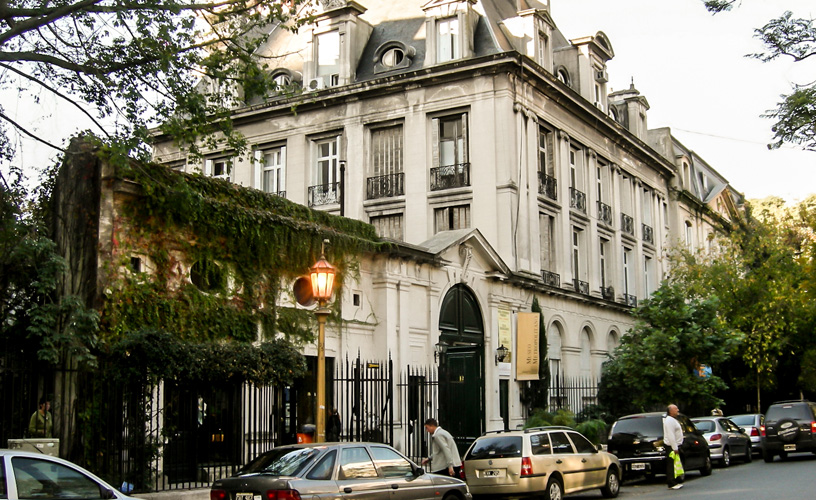
In the Palermo neighborhood
-
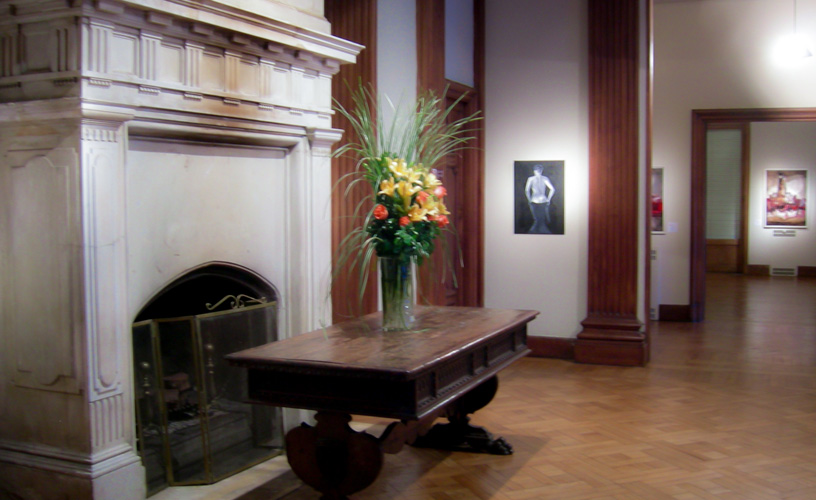
Temporary exhibitions of painting
-
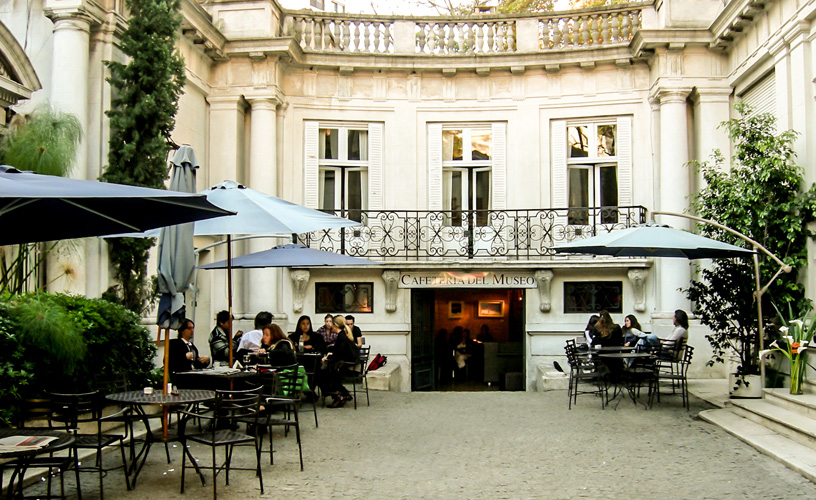
Museum café
-
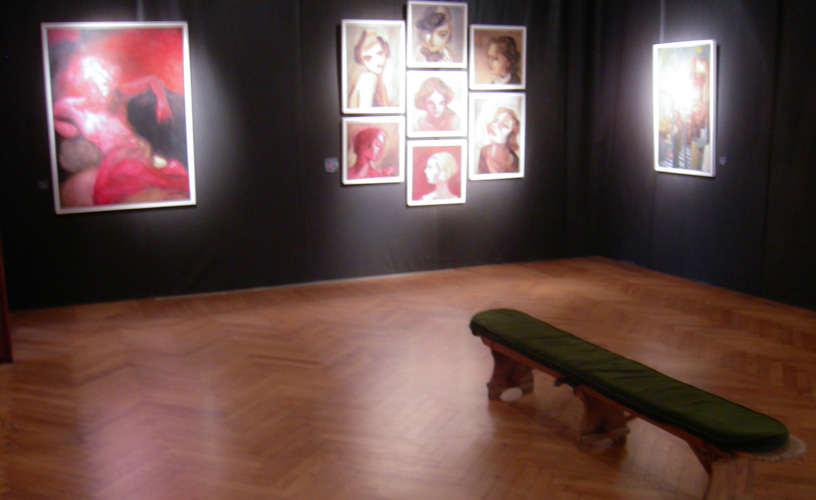
Works by Maria Fernanda Piamonti
The building we were visiting was built in 1928 and it occupies a 3,800-square-meter indoor space. In 1937, it was purchased by Mrs. Leonor Uriburu de Anchorena and it became the family residence for almost fifty years. Eventually, in 1986, it was granted to the Buenos Aires Council, a non-profit civil entity that would care for its maintenance and organize various cultural and educational activities.
Various activities are held at the museum, ranging from courses and lectures to temporary exhibitions. Furthermore, the Metropolitan Museum contains the photographic archives of El Mundo, a newspaper published between 1928 and 1968; a collection of engravings among which a series of works by Leonardo Da Vinci printed in 1784 stands out; and a show revolving around Saint Exupery’s life, the beloved author of “The Little Prince”.
Nevertheless, one of the most interesting aspects of this venue is the first floor halls, where temporary painting, sculpture, drawing and photography shows constantly succeed one another.
One Last Pleasure
As we were about to leave the museum, we indulged ourselves with one last delight: at the entrance yard, the Museum’s Cafè’s tables and parasols were waiting for us.
Sitting in the afternoon sunshine, we enjoyed a cup of coffee immersed in the aristocratic atmosphere of what used to be a house and today is open to all visitors.
 Marcos Rodríguez
  Marcos Rodríguez
 Opening hours: Mondays to Saturdays, from 2.00 p.m. to 8.00 p.m. Phone to check.