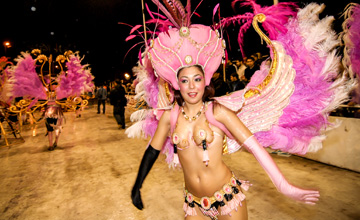
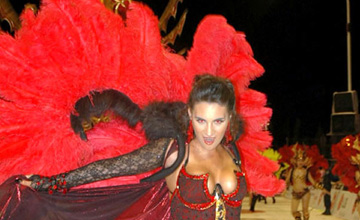
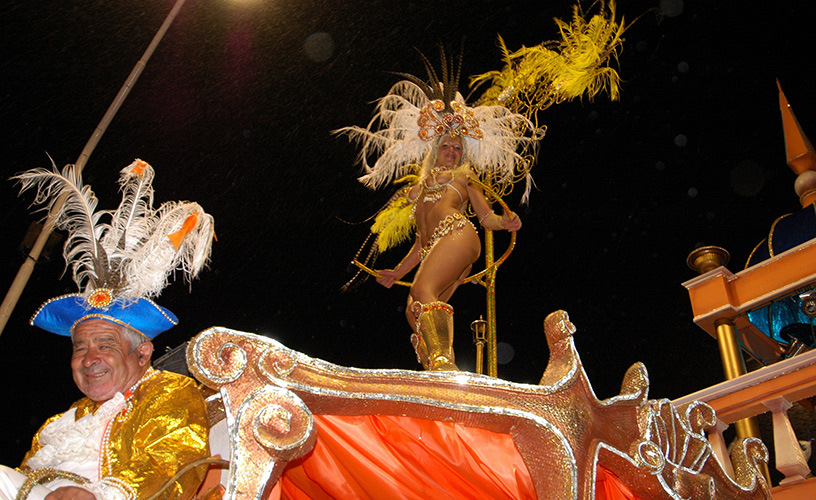
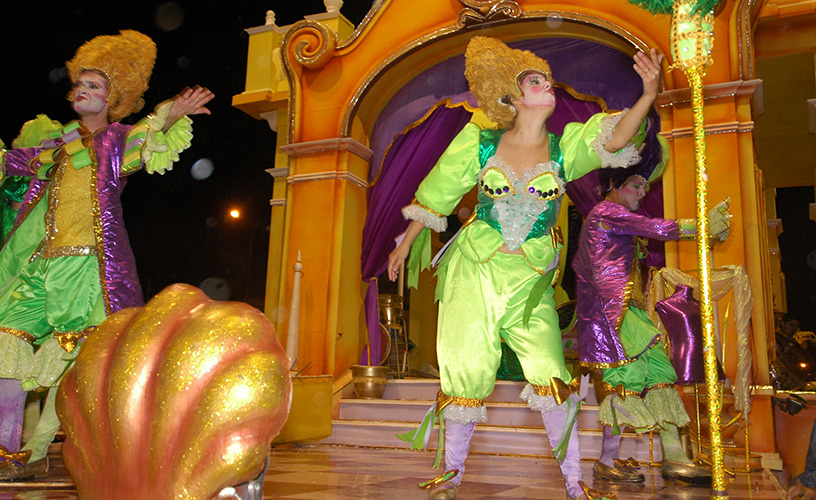
Every year, each float participating in the Carnival is given a theme. This is the motivation that leads to the preparations of costumes and floats, even choreographies and dancing styles that are then shown off by the two hundred and sixty members of each team. The jury chooses the best float considering the dancing, costumes, music and floats. Even if the whole show is assessed, all these items contribute to the general score to crown the kings of Carnival. The parade is opened by a group called front committee, made up by very conspicuous figures and impressive costumes designed in accordance with the theme and searching to impress the viewers. It may be led by a consecrated individual figure or a friend of the float. This is followed with the opening float, which generally includes a presentation of the theme and the name of the comparsa on the front. The two intermediate floats are related by theme to some of the squads and the closing float generally carries a final message forming one same group with the "batucada".
The Corsódromo and the Floats
-
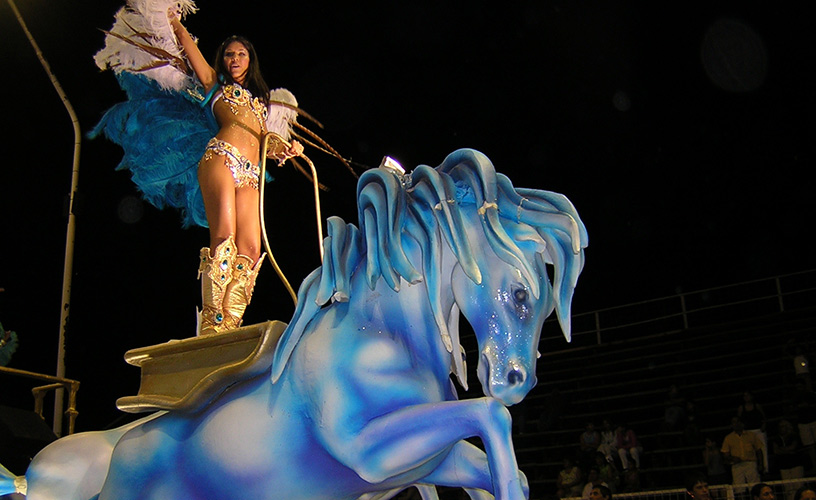
Magnitude and great deployment
-
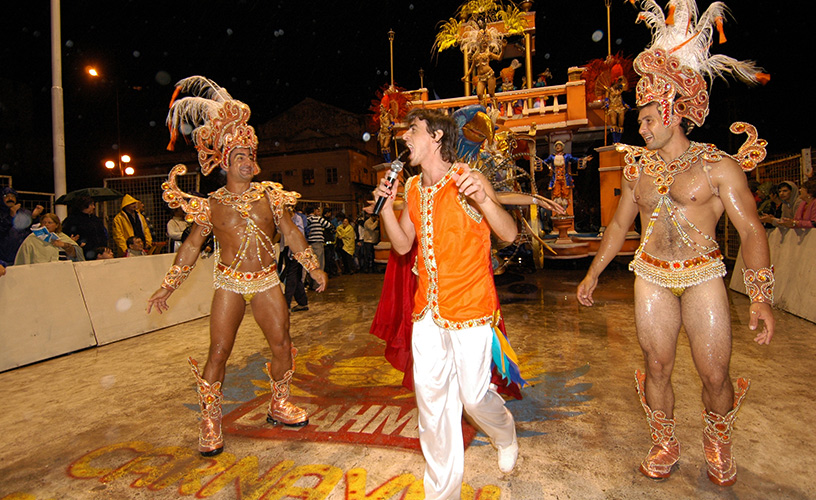
A shared theme
-
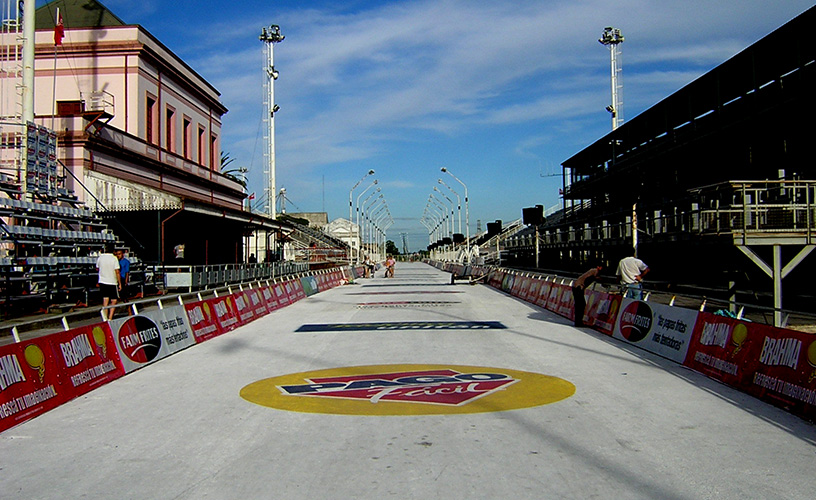
"Corsódromo", ideal scenario
-
Backs and headdresses
-
Leading place
-
An integrated message
-
A place of worship
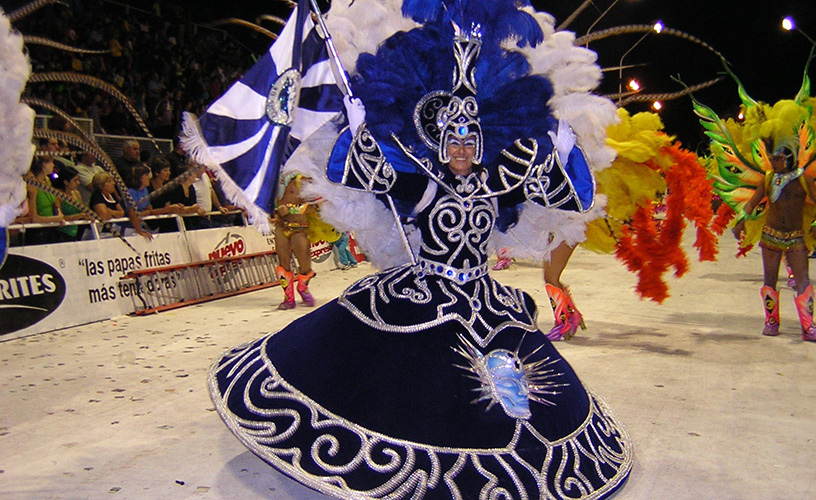
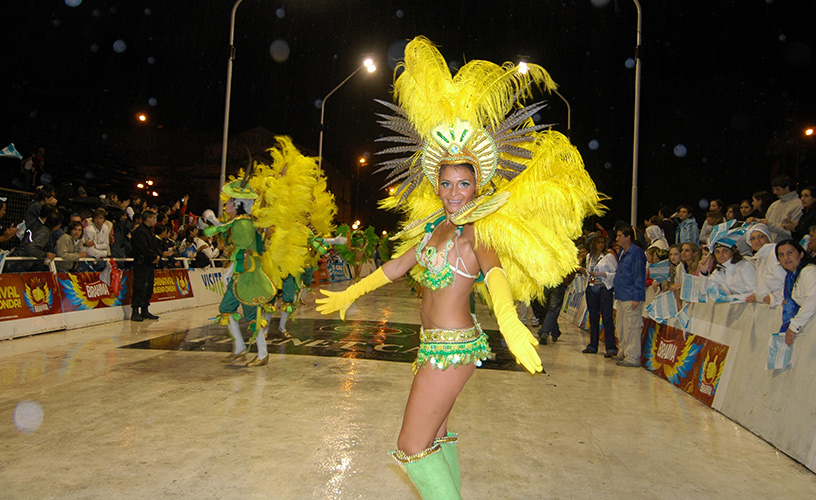
Then a girl and a boy follow the parade. She brandishes a flag and the man dances around her. They are the ambassador couple. Also, the squads represent a sub-theme within the comparsa. Another highly visual attraction are the harnesses, the headdresses, the fancy costumes, the feathers, the orchestra and of course, the Queen, a starring role that gives each team the hope to crown their own representative as the sovereign of Carnival. The magnitude and display typical of the Gualeguaychú Carnival have forced the municipality to appoint the venue where the former railway station used to work for the construction of the Corsódromo, an ideal scenery to enjoy the show. Every Saturday in January and February, the local Corsódromo (located on the corner of Piccini and Ayacucho Streets) awaits for the show to be displayed on its red carpet. Inaugurated on January 18, 1997, this is the first of its kind in the country. It is five hundred meters long and its runway is ten meters wide. This space has all the necessary facilities to seat thirty-eight thousand viewers on grandstands divided into two-hundred-meter sections, boxes with four rows of seats, as well as a VIP sector, with terraced grandstands. This is what the City of Gualeguaychú and its local denizens get ready for throughout the year.
 Pablo Etchevers
 Jorge González