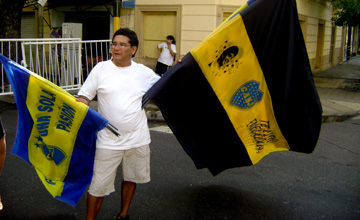
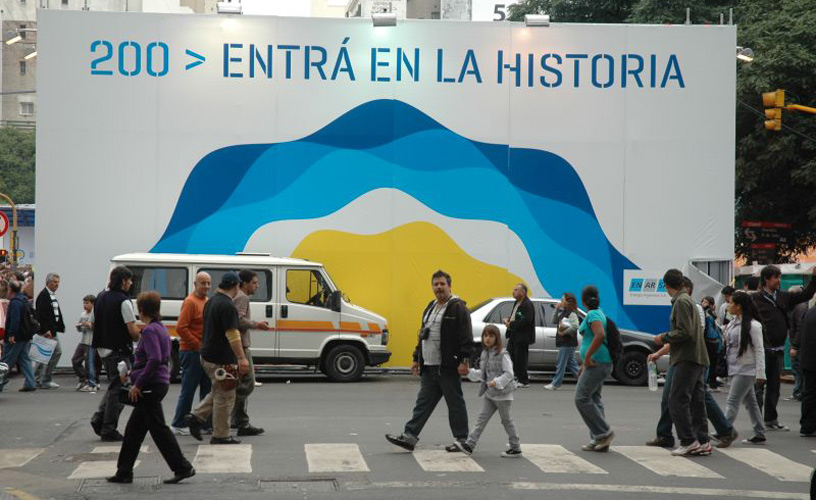
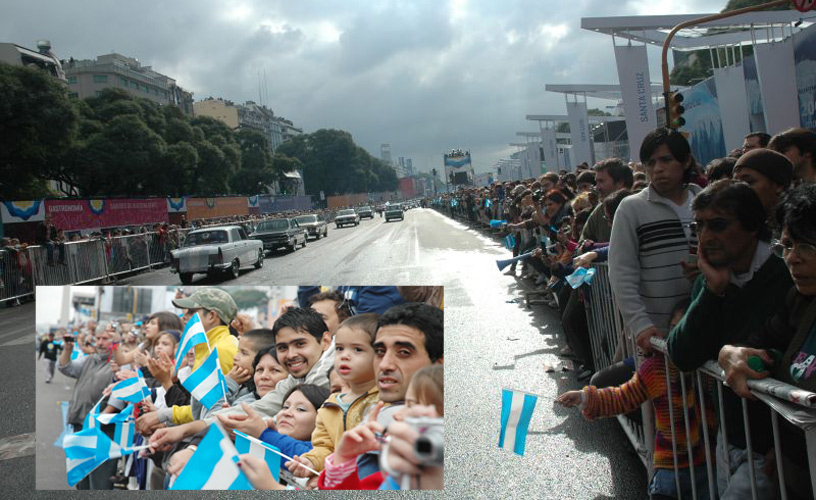
The celebration of the 200 years of our motherland was a real popular festival unlike no other. Beyond the political and ideological flags each citizen may have brandished, it was the national flag, bluer and whiter than ever, which invaded the streets of the entire country and caught the attention of the 42 million inhabitants of Argentina.
The nationalist feeling lured all generations into one common cause: to celebrate the first two hundred years of our history. It certainly had wise decisions as well as mistakes, like in every person’s life, like in every country, like in every historical process.
The modern technologies (digital cameras, cell phones and other devices that record everything that happens) we have incorporated to our lives naturally enabled people to capture scenes, situations and moments that will remain in our memories for good.
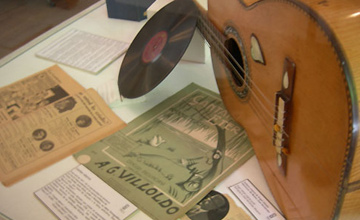
The revels of the Bicentennial took place not only in Buenos Aires, but also in each of the cities and districts in our beautiful country. Its repertoire included tributes, parades, special guests, dancing and popular musicians and artists, as well as exhibitions that invited viewers to popular memorabilia and collective nostalgia.
Officially, the unforgettable week began on May 21, 2010 with a tribute to national rock and its most outstanding artists. This was the celebrations opening.
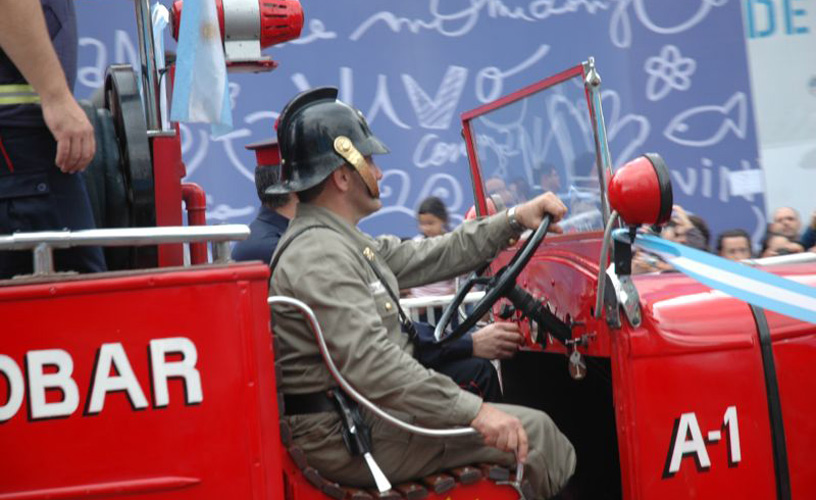
The next day, 9 de Julio Avenue, the widest in the world and the most important in the country, hosted the traditional institutions parade, which was joined by delegations from the Argentinian provinces wearing their typical outfits and showing off their own representatives.
On the third day, the various foreign communities wore their typical costumes and all their color to ratify their protagonist roles in Argentina, highlighting the values of diversity and fraternity. To close the day, tango and folklore were in charge of delighting spectators with their music and dancing.
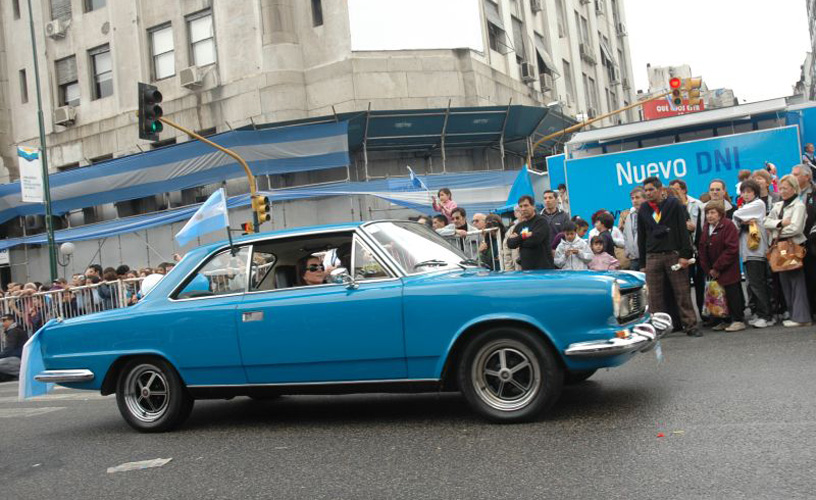
On May 24, 9 de Julio Avenue was turned into a track for old and classic motorbikes and cars. Under the motto "200 Argentinian cars for 200 years of the country", hundreds of thousands of fans were summoned to listen to the roaring engines.
Football, another Argentinian passion, was also present. Before the national team set off to South Africa World Cup 2010, the game Argentina-Canada was played at the River Plate Stadium.
The famous Colón Theater was re-inagurated on that same night, the eve of the Bicentennial. After having been closed for almost 4 years, it opened its gates to visitors and its musicians and its ballet came out to the streets to present an incredible show of light and sound on its architectural façade. In the meantime, just one block away, at the foot of the Obelisk, the National Symphonic Orchestra would also enchante the ears of everyone present.
As the clock stroke midnight and the 25th began, the National Anthem began to be heard and sang at all the corners of the country and in every home. It was broadcast from the rock formation known as Valle de la Luna (Valley of the Moon) in the Province of San Juan to the world. It announced the arrival of the so longed-for Bicentennial.
The traditional Te Deum and an exhibition of touring car racing (another Argentinian passion) along 9 de Julio Avenue managed to wake up thousands of porteños who moved about the city for free (public transport did not charge any tickets on that day) to reach the downtown area.
Buenos Aires was a celebration. It sheltered a crowd that brandished their blue and white flags and badges and who were searching for a place to enjoy what promised to be an unprecedented avant-garde show.
The imposing parade organized by the experimental theater company known as "Fuerza Bruta", directed by Diqui James, included floats, boats and giant decorations. All of this was part of an impressive staging. In 19 scenes, with over 2,000 actors, an account was given of the most significant moments in the latest two hundred years of history.
Singer Fito Páez, from Rosario, and his anthem "Dale alegría a mi corazón" (Give Joy to My Heart), sang by millions of Argentinians, were in charge of closing the party and the fourth day of celebrations. This moment would remain forever in our minds.
Joy was the great protagonist but there was also passion, memory, nostalgia, excitement, self-criticism, uncertainty about who we are. The celebration managed to make us feel equal based on our history, our present and trying to find an answer to our future, so uncertain sometimes.
The festivities had an unusual mature nature and that was a good sign. That makes us think that there is a future, that tolerance may be the way to sort out differences.
And we celebrated with hope, above all. We thought that if we are capable of getting together for the same nationalist festivity, we can also get together to solve the problems that may arise and to enjoy our past and future achievements, thus honoring the lyrics of our national anthem.
Come on, Argentina! The best is yet to come. May all be welcome to this wonderful country. Our country.
 Pablo Etchevers
 Pablo Etchevers